IP ratings, RFI filters and brake choppers explained
What IP20, IP21, IP54, IP55 and IP66 mean for a drive, how RFI filter classes map to EMC categories C1–C4, and when you need a brake chopper.
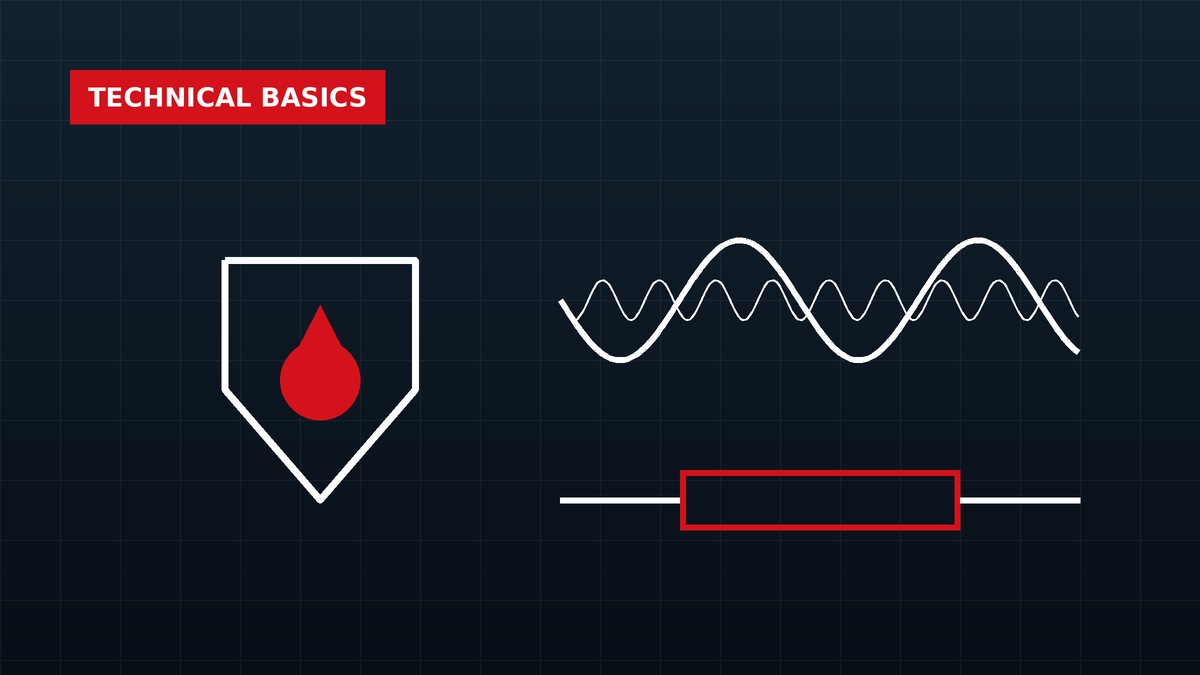
Three options appear in almost every drive model code and change both price and suitability: the enclosure (IP rating), the RFI filter and the brake chopper. This is what they mean.
IP ratings (IEC 60529)
The first digit is protection against solid objects and dust. The second digit is protection against water.
| Rating | Protection | Typical installation |
|---|---|---|
| IP00 | Open chassis, no enclosure protection | Modules built into a cabinet |
| IP20 | Protected against fingers and objects > 12.5 mm, no water protection | Inside an electrical cabinet |
| IP21 / UL Type 1 | As IP20, plus protection against vertically dripping water | Clean plant rooms, wall mounting |
| IP54 | Dust-protected, protected against splashing water | Industrial areas, wall mounting |
| IP55 | Dust-protected, protected against water jets | Industrial and HVAC plant rooms |
| IP66 | Dust-tight, protected against powerful water jets | Wash-down areas, outdoors, motor-mounted drives |
A higher IP rating usually means a larger or more expensive drive. Choose the lowest rating that suits the site – an IP20 drive in a good cabinet is often the most economical solution.
RFI filters and EMC categories (IEC 61800-3)
A frequency converter creates high-frequency interference. The built-in RFI filter reduces it to the level required where the drive is installed. In our catalogue the filter classes map to EMC categories like this:
| RFI filter | EMC category | Where it can be used |
|---|---|---|
| Class A1/B | C1 | First environment (residential, commercial) without restrictions |
| Class A1 | C2 | First environment, installed and commissioned by a professional |
| Class A2 | C3 | Second environment (industrial networks) |
| None | C4 | Second environment, in complex systems with their own EMC plan (e.g. very high power) |
Motor cable length matters as well: the EMC category is only met up to the cable length stated by the manufacturer. For long cables, check the design guide or ask us.
Brake chopper
When a motor decelerates quickly or is driven by its load (hoists, downhill conveyors, centrifuges, large fans), it works as a generator and feeds energy back into the drive’s DC link. Without a way to get rid of that energy, the drive trips on overvoltage.
A brake chopper is an electronic switch inside the drive that sends this energy to an external brake resistor, where it becomes heat. The resistor is sized separately for the braking power and duty cycle. If braking is frequent and energy costs matter, a regenerative or active front end drive can be a better choice.
You don’t need a brake chopper for most pumps and fans that are allowed to coast or ramp down slowly.
Find the right variant
Every product page shows the enclosure, RFI filter and brake chopper of that exact model code. On the series pages you can filter by IP rating, RFI filter and Brake chopper – for example on the VLT® AutomationDrive FC 302. For sizing, see our 7-step drive selection checklist.